


-
 14 Jan, 2026
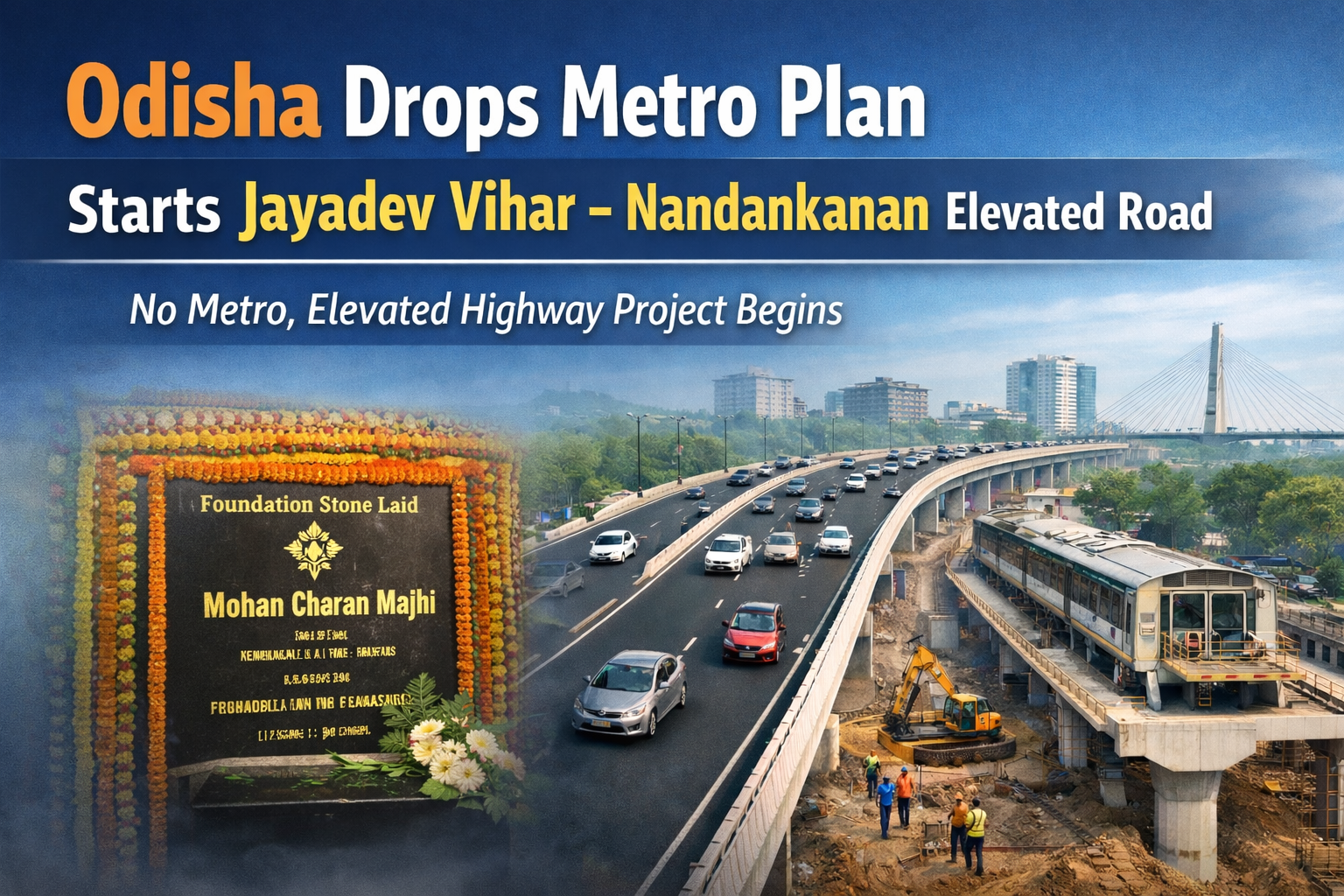
Odisha Drops Metro Plan, Starts Jayadev Vihar–Nandankanan Elevated Road
Bhubaneswar, January 13, 2026:
In a major update to the city’s urban mobility plan, the Odisha government has decided not to proceed with the proposed metro-elevated corridor between Jayadev Vihar and Nandankanan. Instead, the focus has shifted to developing a massive Rs 952 crore elevated road corridor aimed at easing the heavy traffic flow along this key arterial route.
Chief Minister Mohan Charan Majhi laid the foundation stone for the 9.5-km elevated corridor, which will connect Kalinga Stadium to Raghunathpur. The government has stated that the project is part of Bhubaneswar’s long-term infrastructure development strategy, designed to enhance connectivity and reduce congestion on one of the busiest stretches of the city.
The project will be executed by the Odisha Bridge and Construction Corporation (OBCC), and is expected to be completed within two years. The elevated corridor will widen the current roadway and integrate advanced traffic management systems to streamline movement.
Key components of the project include multiple flyovers and grade-separated roundabouts at major junctions such as Jayadev Vihar, Kalinga Hospital Square, Damana Square, and KIIT Square. These structures are intended to reduce bottlenecks and improve the overall efficiency of vehicular flow.
A significant feature of the plan is a four-lane cable-stayed bridge at Jayadev Vihar junction on National Highway 16, which is expected to become a major architectural landmark in the city.
Officials confirmed that the metro plan for this stretch has been temporarily put on hold as the Detailed Project Report (DPR) is being revisited. The elevated road project, they said, will provide immediate benefits in terms of traffic reduction while keeping the door open for future metro integration if required.
This decision signals a strategic shift in the state’s urban development approach, prioritizing road infrastructure upgrades to address present-day mobility challenges while continuing to assess long-term mass transit feasibility.


